


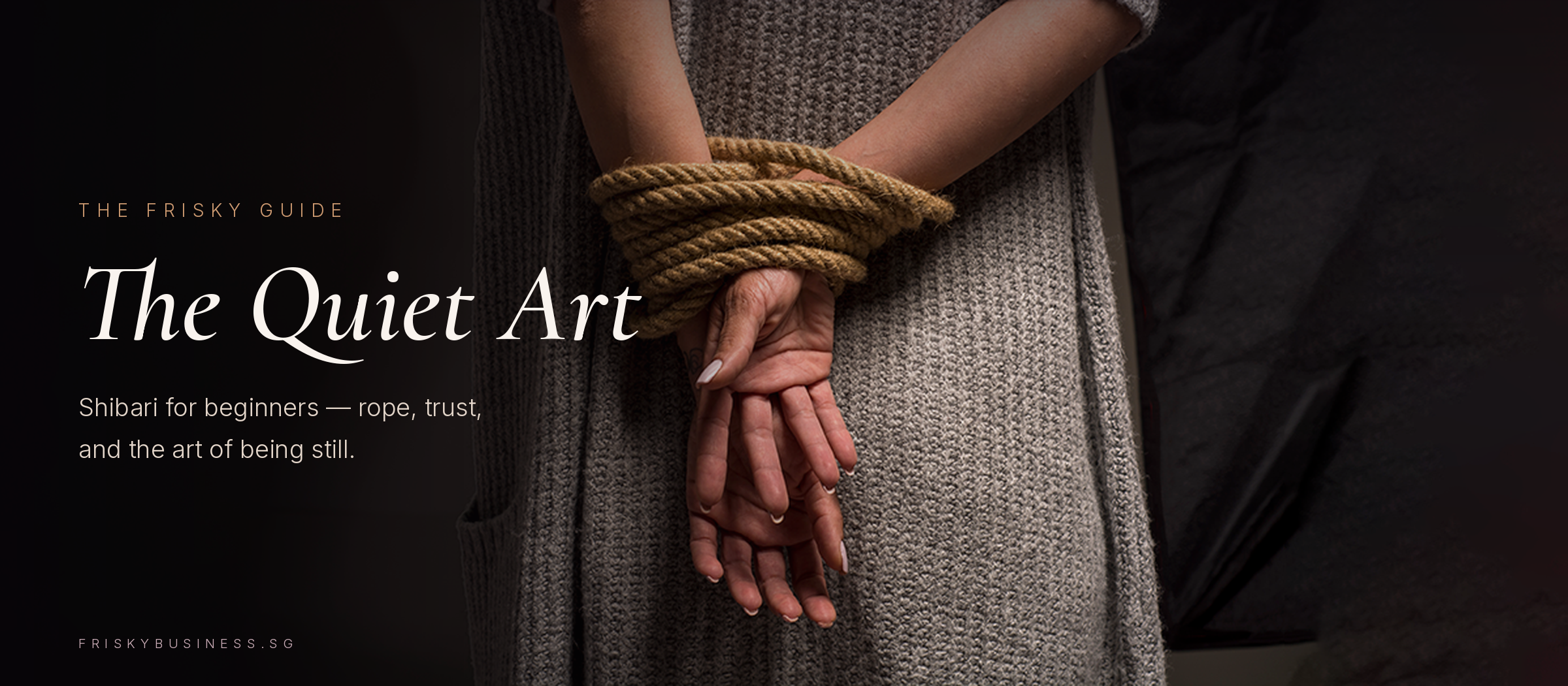
Shibari: The Complete Guide to Japanese Rope Bondage
THE COMPLETE GUIDE
Shibari: The Complete Guide to Japanese Rope Bondage
There's a moment, a minute or two into being tied, when most people stop fidgeting. The shoulders drop. The endless mental to-do list goes quiet. That stillness — not the knots, not the aesthetics — is the thing shibari is really about. It's why a 400-year-old Japanese art keeps finding its way into modern bedrooms, including a surprising number of quiet ones here in Singapore, where it's one of the most-searched intimate topics of all.
This is a complete, beginner-honest guide to shibari: what it is, where it came from, why it captivates people, and — most importantly — how to start safely on the floor without ever leaving the ground. No experience assumed, no intimidating knot diagrams, and nothing you can't try this weekend with a single length of soft rope.
What is shibari?
Shibari (縛り, literally "to tie") — often used interchangeably with kinbaku, "tight binding" — is the Japanese art of decorative, intentional rope bondage. It grew out of hojōjutsu, a martial technique samurai once used to restrain prisoners, and over centuries it softened into something closer to performance, meditation and intimacy: rope used to frame the body, create patterns against the skin, and choreograph a slow, deliberate exchange of trust and control.
Two roles sit at its heart. The rigger (in Japanese, the nawashi) ties; the bottom or model receives. Neither is passive — the rigger reads the breath and the body, and the bottom isn't simply "tied up" but actively holds the experience. Where Western bondage is often about function (secure the wrists, move on), shibari is about presence: the unhurried wrap of the rope, the eye contact, the focus. Done well, it feels less like restraint and more like being paid complete, undivided attention.
A brief history — from battlefield to bedroom
Rope has been used to bind in Japan for centuries, but the leap from restraint to art form happened gradually. By the Edo period, the precision of hojōjutsu had developed an aesthetic dimension. In the 20th century, performers and photographers turned it into a recognised erotic art, and figures like Seiu Itō are often credited with shaping modern kinbaku. Today it's a global practice with a deep etiquette of consent and care — which is exactly why it rewards learning properly rather than copying a single striking photo online.
Why shibari captivates people
Ask ten enthusiasts why they love rope and you'll get the same answer ten ways: it quiets the noise. For the person being tied, surrender is a rare permission slip — nothing to do, nowhere to be, no decisions to make. Many describe drifting into a calm, floaty, almost meditative headspace the community calls "rope space." For the rigger, tying is absorbing in the way any craft is: a single task that demands your hands and your full attention at once. And then there's the simple, undeniable beauty of it — rope laid in clean lines across skin is genuinely striking, which is why shibari is as much an art form as an intimate one.
Crucially, none of this requires pain. Shibari can be entirely gentle. The intensity, when it comes, is born of trust and stillness, not force.
The Singapore reality: why rope suits life here
Most rope tutorials are written for somewhere with thick walls and spare rooms. Singapore is rarely that, so here's what actually matters locally — and why rope quietly suits HDB and condo living better than almost any other kind of play.
- It's silent. No motors, no buzzing — thin walls aren't a concern. That alone makes it one of the most discreet intimate pursuits going.
- It stores away to nothing. A few metres of rope coils into a drawer. No wall of equipment to explain, no furniture to hide.
- You don't need a dedicated space. Floor work needs only a bed or a soft rug — no ceiling hard-points, no dungeon.
- It's legal and private. Consensual rope play between adults at home is an ordinary private matter; for the wider picture on adult products locally, see our guide to BDSM in Singapore.
Floor work first — forget suspension
Open any rope hashtag and you'll see bodies hoisted dramatically into the air. Ignore all of it for now. Suspension is advanced, genuinely risky, and completely unnecessary to enjoy shibari. Floor work — ties done sitting or lying down, with the body always supported by the ground — is where everyone should begin, and where most people happily stay for years. Every benefit of rope (the stillness, the surrender, the beauty) is fully available on the floor, with a fraction of the risk.
Safety: the rules you never skip
Rope is forgiving right up until it isn't. A handful of rules make all the difference, and none of them are optional.
- Never tie around the neck. Not loosely, not "carefully." No rope across the throat, ever.
- Watch the nerves, not just circulation. The outside and inside of the upper arm are vulnerable. If your partner reports tingling, numbness or "pins and needles" — especially in the hands — release that section immediately. Nerve compression happens faster than people expect, and it's the injury beginners most often cause.
- Keep safety shears within arm's reach. Blunt-tipped emergency shears that cut through rope in one motion are non-negotiable — buy them before anything fancy.
- Two fingers of room. You should always be able to slip two fingers under any wrap. Snug is the goal; tight enough to pinch or mark is not.
- Check in, out loud. Agree a safeword (the traffic-light system — red, yellow, green — works beautifully), and if a blindfold or gag is involved, agree a non-verbal signal too, like holding and dropping a key.
Faint pink rope marks that fade within minutes to hours are normal. Bruising, broken skin or lasting numbness are not — they mean a tie was too tight or left on too long.
Choosing your first rope
The rope matters more than any technique. For a first set, look for something soft, around 7–8 metres long, and forgiving on the skin. Traditional jute looks gorgeous in photographs but is stiff and demands conditioning — beginners do far better with a soft cotton or smooth nylon that glides, holds a knot, and washes easily. Our OBEY beginner bondage rope is exactly this: silky, durable, and quietly the most rewarding twelve dollars you'll spend on the whole hobby. When you want the classic natural-fibre look and feel, the OBEY hemp rope is the natural next step. Prefer no knots at all to begin? Bondage tape sticks only to itself and is a gentle way to feel the sensation first. Browse the full bondage gear range for shears, cuffs and more. For a fuller breakdown of fibres, diameters, how many lengths to buy and the order to learn ties in, see our bondage rope buying guide.
Your first tie, in plain terms
You don't need a repertoire of knots. You need one good foundation: the single-column tie — a secure, non-tightening cuff around one wrist or ankle that won't cinch closed under tension. Master that one tie and you can do most floor work safely. Here's the shape of a gentle first session:
- Talk first. Sit somewhere comfortable and agree what you each want from it, what's off the table, and your safeword.
- Start with a single wrist. Wrap slowly. Let the pace itself be part of the experience — there's no prize for speed.
- Pause and look. Ask how it feels. Adjust. This checking-in is the intimacy, not an interruption to it.
- Deepen it gently. Add a soft blindfold if you'd like — removing sight makes every touch and every shift of the rope louder.
- Untie slowly, and stay close. The wind-down matters as much as the tie (more on that below).
When you're ready for actual patterns, learn from a reputable rope educator — in person or via a trusted course — not from a single photo. A pretty picture rarely shows where the tension and the nerves actually sit.
Aftercare: where the trust is built
Rope stirs up more than people expect. The calm, floaty high of being tied is often followed by a dip — sometimes called "drop" — as the body settles. Aftercare is how you land softly: water, a blanket, warmth, quiet closeness, a few unhurried minutes together. For the rigger too — holding that focus is its own kind of intensity. Treat the wind-down as part of the scene, not an afterthought; it's where the trust that makes the next session better is actually built.
Our Top Picks for beginners
Soft, silky and forgiving — the single best place to start, and the most rewarding twelve dollars in the whole hobby. View product
The classic natural-fibre look and grip, once you've found your feet with softer rope. View product
Sticks only to itself, never to skin or hair — a no-knots, no-commitment way to feel the sensation first. View product
Where to go next
Shibari rewards patience over ambition. Begin with one rope, one tie, and a willingness to go slowly — the beauty and the stillness arrive on their own. When you're ready to broaden out, our bondage rope guide covers the practical side — what to buy, how much, and which ties to learn first — our BDSM basics guide is a natural next read, and the full BDSM in Singapore guide places rope within the bigger picture of consent, gear and play.
Frequently Asked Questions
What is shibari?
Shibari is the Japanese art of decorative rope bondage — tying the body in deliberate, often beautiful patterns as a form of intimacy, trust and sometimes performance. It evolved from a historic martial restraint technique (hojōjutsu) into an art form, and is closely related to kinbaku ("tight binding"). It doesn't have to involve pain.
Is shibari safe for beginners?
Yes, when you stick to floor work (never suspension), never tie around the neck, keep safety shears within reach, and watch for numbness or tingling that signals nerve pressure. Start with one simple, non-tightening tie and learn patterns from a reputable educator rather than a single photo.
What rope should a beginner buy for shibari?
A soft cotton or smooth nylon rope around 7–8 metres long. It's gentle on skin, holds knots well, and is far more forgiving than traditional jute, which is stiff and needs conditioning. Buy safety shears at the same time.
Does shibari hurt?
It doesn't have to — most floor-based shibari is gentle, and the appeal is the stillness, surrender and connection rather than pain. Faint rope marks that fade quickly are normal; bruising, broken skin or lasting numbness mean a tie was too tight and should be released immediately.
Can I practise shibari at home in Singapore?
Yes. Rope is silent, stores away discreetly, and needs only a bed or soft rug for floor work — which suits apartment living well. Consensual rope play between adults at home is an ordinary private matter.
What is "rope space"?
It's the calm, floaty, almost meditative headspace many people drift into while being tied — a blend of surrender, focus and trust. It's also why aftercare matters: coming down from it gently helps avoid an emotional dip afterwards.
Ready to begin? Start with a soft beginner's bondage rope and explore the full range of BDSM & bondage gear in Singapore — body-safe, beginner-kind, and delivered discreetly across the island.